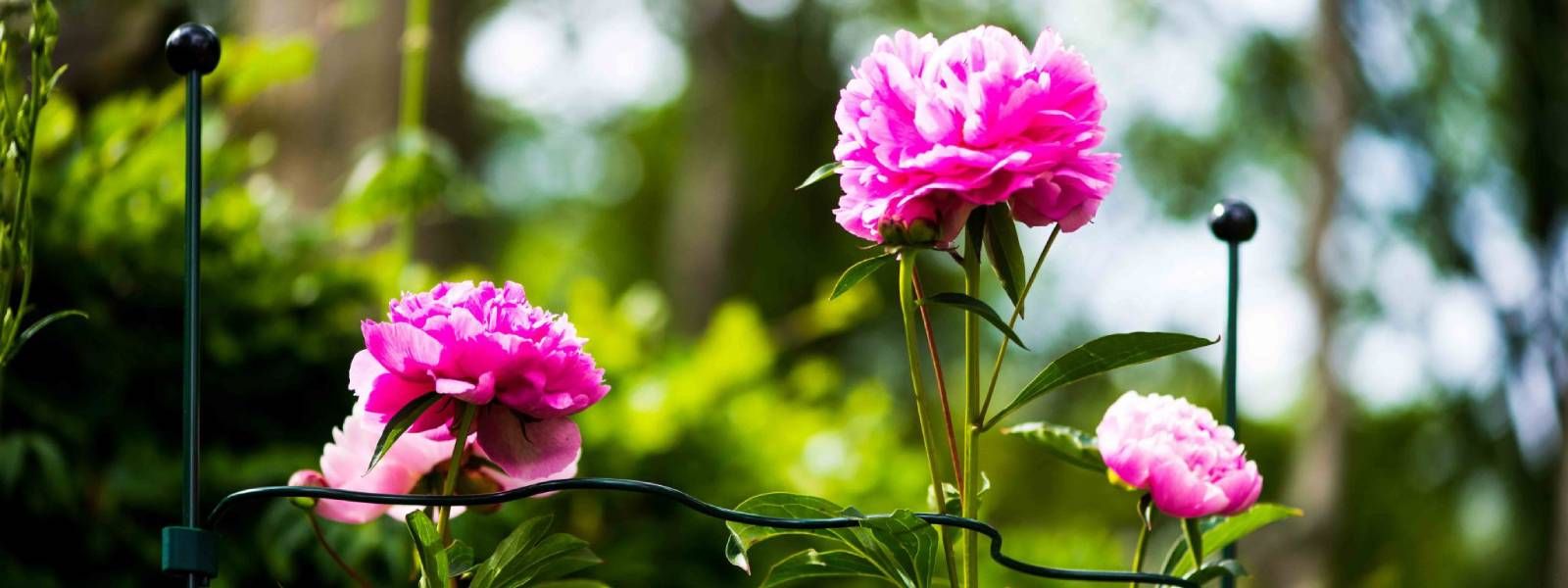



Spring First-Aid: how to prevent heavy tulips and peonies from snapping

Spring is the most magical time of the year for many garden enthusiasts. After months of grey skies and bare branches, nature awakens in an explosion of fresh green foliage and bright colors. You carefully planted flower bulbs in the autumn and anxiously waited for the moment the buds would burst open. And then the time has come: your garden is full of stately tulips, architectural alliums, and lush peonies.
But the Dutch spring also has a fickle side. April does what it wants, and May can be treacherous with sudden downpours and fierce gusts of wind. Right when your early bloomers are carrying their heaviest and most spectacular flowers, the weather changes. The result? Snapped stems, flowers lying face down in the mud, and a border that suddenly looks messy and chaotic.
Fortunately, you don't have to watch helplessly. With the right preparation and smart 'Spring First-Aid,' you can keep your spring garden perfectly organized, tidy, and radiant. In this blog, you will discover how to subtly yet effectively support your early eye-catchers with the high-quality solutions from Peacock.
Why Spring Bloomers Are So Fragile
Plants such as tulips, ornamental onions (alliums), and peonies have one thing in common: they produce a massive amount of mass in a very short time. Within a few weeks, a long stem shoots out of the ground that has to end in a striking, often top-heavy flower.
When a rainstorm fills the large petals of a peony or a double tulip with water, the weight of the top increases drastically. If a strong gust of wind hits it, the flower head acts like a sail, and the stem snaps at the base. This is not only a waste of the beautiful flower, but snapped plants also immediately disrupt the tranquility and structure in your flower border. An organized garden stands or falls with plants that stand beautifully upright in their designated spots.
Spring First-Aid Tip 1: Subtly Supporting Tulips
Tulips come in thousands of varieties, and while the classic single tulip can often withstand quite a bit of wind, it is mainly the popular double tulips (also called peony tulips) that have a hard time. Their flowers are so full and large that the fragile stem often cannot handle it. Because tulips are often planted in groups, you want to prevent your border from looking like a spiderweb of stakes and twine.
-
The approach: Use our thin, yet extremely strong galvanized Peacock plant stakes. Place a stake next to the most vulnerable tulips on the outside of the group and use soft, dark green tie wire or a plant binder to secure the stem just below the flower head.
-
The result: Because the Peacock supports are provided with a dark green coating, they completely blend in against the stems and foliage. Your tulips remain standing proudly upright, and you maintain a sleek and well-kept appearance.
Spring First-Aid Tip 2: Keeping the Heavy Peony in Line Early
The absolute queen of late spring is the peony. The enormous, fragrant flowers soak up water like sponges during a rainstorm. Without support, the stems irrevocably fall open from the heart, creating a gaping hole and causing the flowers to rot on the wet soil.
-
The approach: With peonies, timing is everything. If you wait until the plant blooms, you are too late. Place a grow grid, support ring, or half-round plant support in the early spring, when the red shoots are just coming out of the ground.
-
The result: As the foliage and stems grow, they completely hide the metal of the support. At Peacock, we have smart, grow-along support rings in our assortment. You can easily slide these up along a ground pin as the peony grows taller. This way, the plant grows into a beautiful, compact, and tidy bouquet in your border.
Three Golden Rules for Spring First-Aid
To be able to enjoy your garden carefree this spring, we summarize the Spring First-Aid in three golden rules:
-
Be on time: Place rings, grids, and stakes as early as April or May. Let the plant grow through the support for the most natural effect.
-
Choose the right proportions: A support should never stick out above the flower. Choose dark green material to keep the attention on the plant.
-
Guide gently: Never tie plants too tightly. Use soft tie wire or flexible plant binders so the stem still has room to thicken.
By providing the right structure in the spring, you prevent disappointments and ensure that every tulip head and peony remains the radiant centerpiece of a perfectly maintained garden. Which early spring bloomer in your garden could use some extra support this season?